

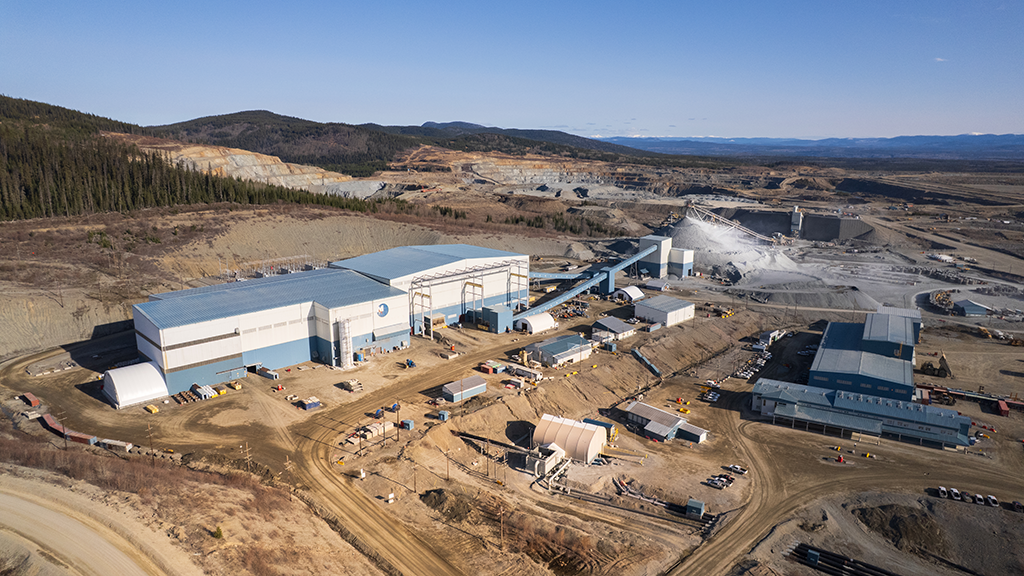
Spurred by rising precious metal prices, a world hunger for critical metals, uranium and steel-making coal, new mine development and expansion is occurring in Western Canada creating thousands of new construction jobs.
B.C. and Saskatchewan are leading with major projects while Alberta plans investment incentives.
“There is momentum in the mining industry,� said BC Mining Association president Michael Goehring, after years of stagnation blamed on over-regulation and process duplications hamstringing new B.C. mine development.
“We are beginning to see progress in the permitting and in the authorization of major mines.�
But, he adds, the provincial government still needs to further streamline the regulatory process.
In 2025, B.C. Premier David Eby announced 18 fast-tracked projects that would encourage new job creation after the feared job-loss from U.S. tariffs on the lumber sector.
“Four of those were mines. Of those four, three have received permits,� Goehring said, adding two are now in construction.
Eskay Creek, a $713 million revitalization project, will create over 1,000 construction jobs and 770 operational jobs. °µÍø½ûÇøion is set to be complete in mid-2027 with commercial production beginning late 2027. The Highland valley copper mine life extension received a permit in June 2025 and now is under construction. Projected capital expenditures are $2.1 to $2.4 billion through to 2028.
The third project, Mount Milligan, saw its permit extended from 2028 to 2035 with capital costs to expand the pit and tailings pond standing at $400 million.
In the past three years, three of the world’s top 10 largest mining giants: Newmont, Glencore and Anglo American have bought into B.C. projects.
Newmont, the world’s largest gold mining company, is proposing to convert the open-pit Red Chris mine (depleted by 2028) into an underground operation through a $3 billion block cave mining project extending production a decade. At peak, 1,800 construction workers will be needed.
Goehring said a 2025 association survey found 27 projects planned in B.C. with the average cost of $1.7 billion and the average mine construction period of three years. The mines, depending on their initiation would contribute $20 billion to suppliers and $12 billion to government revenues.
In Saskatchewan, Denison Mine Corporation’s $420 million Wheeler River Project and NexGen Energy Ltd.’s $1.5 billion Rook 1 Project both received approval from the Canadian Nuclear Safety Commission in early 2026 to begin construction. °µÍø½ûÇøion starts on Wheeler River in 2026.
“These projects are significant as there has been no new (uranium) mines development since 2004,� said Eric Anderson, executive director for the Saskatchewan Industrial and Mining Suppliers Association (SIMSA), an organization that puts contractors in touch with sellers. “Saskatchewan produces 25 per cent of the world’s uranium and that could go up substantially,� he said, adding the area is known for producing a very rich grade of uranium.
SIMSA is actively focused on building a nuclear supply chain for emerging Saskatchewan projects.
These projects follow the PBH Jansen potash project and Foran’s McIlvenna Bay copper-gold-zinc mine (starting in 2026). The Jansen potash project is massive and expected to cost $18 billion, becoming Saskatchewan’s largest such project. Wicehtowak Aecon Industrial Limited Partnership is expected to deliver Jansen’s Phase One in late 2026.
Saskatchewan projects whether its oil, gas or minerals are generally large, Anderson said.
“There is a saying here that we don’t get out of bed for anything that is less than $1 billion.�
Anderson, who hosts a daily radio industry commentary, said these projects are pointing towards more work for member companies who all have offices in Saskatchewan, a condition of membership.
Alberta, known for its metallurgical coal mines with several proposed, is awakening to the world’s critical mineral needs and attempting to woo in new investment with an incentive program slated to launch in 2027.
Energy and Minerals Minister Brian Jean made the announcement in March in a bid to strengthen the province’s mineral production and processing sector.
Jean said Alberta is looking at different options. These include non-refundable mineral processing tax credit opportunities, increased access to appropriate Crown land and a flow-through share tax credit to allow critical mineral exploration and allow corporations to claim a portion of their expenses and development resources. The incentive program builds on regulatory changes already in place under the Mineral Resource Development Act.
Fortune Minerals Limited is already out of the gate. In December, it purchased a 30-hectare site in Alberta’s northeastern Heartland industrial area to create a refinery site adjacent to the Canadian National Railway. The site has 42,000 square feet of serviced shops and facilities that will be expanded and retrofitted.
The new facility will process critical mineral concentrates (cobalt, gold, bismuth and copper) from their proposed NICO project in the Northwest Territories.





Recent Comments
comments for this post are closed