

The Government of the Northwest Territories and Deputy Premier Caroline Wawzonek struck gold March 12 with the announcement by Prime Minister Mark Carney that its top three priority projects are being referred to the federal Major Projects Office.
Wawzonek, who is also the Territories’ minister responsible for the Northwest Territories Power Corporation and for strategic infrastructure, had discussed timelines and details of the , Arctic Economic and Security Corridor and Taltson hydroelectric expansion projects during a presentation to mining stakeholders at the Prospectors and Developers convention in Toronto March 2.
Carney’s announcement in Yellowknife 10 days later that the projects would become federal priorities was part of a larger package that included more than $35Ìýbillion in federal funding to “defend, build and transform Canada’s Northern and Arctic region and major projects.â€�
Premier R.J. Simpson responded with a statement: “When completed, these major infrastructure projects will reshape transportation, energy and economic opportunity in the North and help define Canada.�
Wawzonek told the miners the N.W.T. has been heavily reliant on the production of three diamond mines to support its economy – representing 33 per cent of GDP at one point – but all three are in decline and could be shuttered within 10 to 15 years.
The Diavik Diamond Mine will be the first to close, with Rio Tinto set to end production this month.
That makes acceleration of work on the three projects – two for the development of all-season roads, the other to supply essential power – critical to the economic pivot the N.W.T. must make.
Wawzonek outlined the extent of the infrastructure challenges, noting the N.W.T. has 33 communities but only 19 with all-season road access. The N.W.T. is not connected to the North American energy grid at all.
“We have multiple critical minerals deposits. It is a huge and largely under-explored region of Canada,� said Wawzonek. “There’s a tremendous amount of opportunity, but there’s a real lack of connectivity across the North.�
Mackenzie Valley Highway
The project is being advanced in two stages. The proposed 800-kilometre all-season gravel road would pass through the traditional territories of the three First Nations, connecting Wrigley to Tulita and Norman Wells in the 320-kilometre phase one, while phase two will proceed north to Inuvik.
Phase one is already in an environmental assessment.
“We are now under a lot of pressure, but positively so, to see what we can do to accelerate our timelines,â€� Wawzonek said. “We’re looking at what we can do to start to overlap those processes more.â€�
She said construction could start as early as 2027.
In her March 2 session the minister pointed to various deposit sites of tungsten, copper, LNG and other commodities on a map.
“There’s lots of opportunity, but we need to be able to access it,� Wawzonek said.
The Inuvik–Tuktoyaktuk Highway, currently the only all-season road to Canada’s Arctic coast, runs north from Inuvik through the Yukon to reach the Arctic Ocean.
Arctic Economic and Security Corridor
The AESC is a proposed 400-kilometre all-season road through the Slave Geological Province to the Nunavut border, where it will connect with the Grays Bay Road and on to the proposed deep-water port at Grays Bay, a project that was also referred to the Major Projects Office.
The project is being led by the TlichoÌýgovernment and Yellowknives Dene First Nation in partnership with the Government of the Northwest Territories, with exact routing currently under discussion.
The infrastructure would advance future copper, zinc and gold mine development. Wawzonek said the N.W.T. has had longstanding chicken-and-egg discussions with mine interests to see who would start work first.
“This is not how you build a country,� she said.
Wawzonek said she has viewed maps showing 20 different routes. The current timeline would see construction start in 2031.
“There’s lots of groundwork already done,� said Wawzonek.
The Major Projects Office will now work with proponents on funding and regulatory and logistical acceleration options.
Ìý
Taltson Hydro Expansion Project
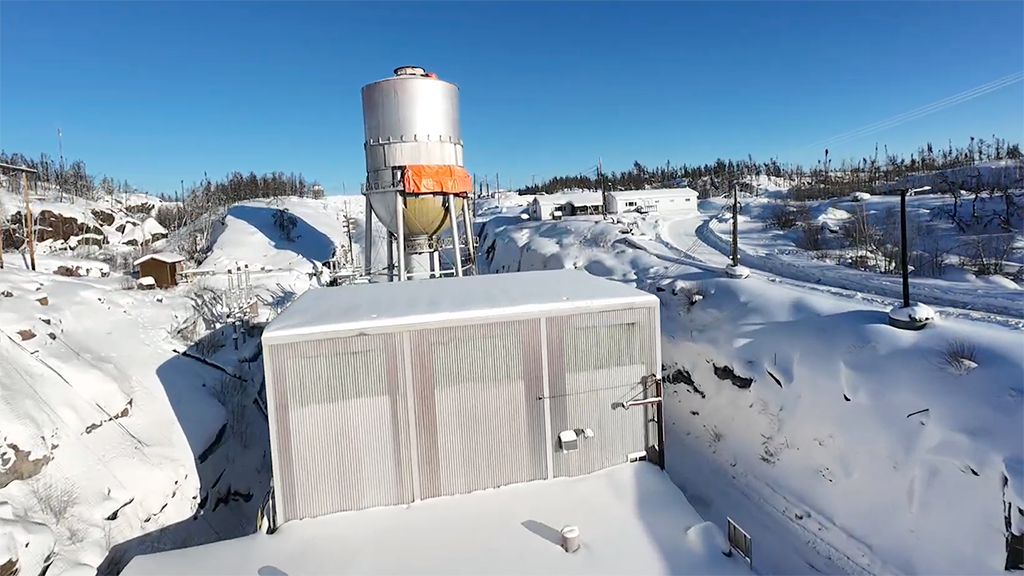
The Taltson project in the Great Slave Lake region would double the Northwest Territories’ hydro capacity. It is being advanced by five Indigenous nations.
The proponents would build an additional 60-megawatt hydro facility and connect the North and South Slave Lake electrical grids for the first time through a 320-kilometre transmission line, including an underwater section.
Wawzonek noted the Taltson facility was originally built in the 1960s for Pine Point mine, a producer of lead and zinc. That mine was sidelined but may now be brought back online.
The project would link 11 communities in addition to multiple proposed mining operations. It could also enable a future project to connect the N.W.T. grid to the rest of Canada.
Wawzonek said the current timeline for the project includes an EA this year, with a commercial structure still to be determined and an FID to be reached, moving to the start of construction in 2029 with first power by 2033.
Carney’s announcement said the Major Projects Office will collaborate with the government to assess the project’s financial and business case and streamline the regulatory processes. Planning is proceeding swiftly, said Wawzonek.
She added there are significant opportunities for lead, zinc and lithium extraction and there are still “tremendous� gold deposits north of Great Slave Lake.
“Three mines alone would pretty well buy that the extra capacity that we have, and we have more than three that are looking to be at a potential decision-making point in their mind towards mine operation within the next few years,� she said.



Recent Comments
comments for this post are closed