

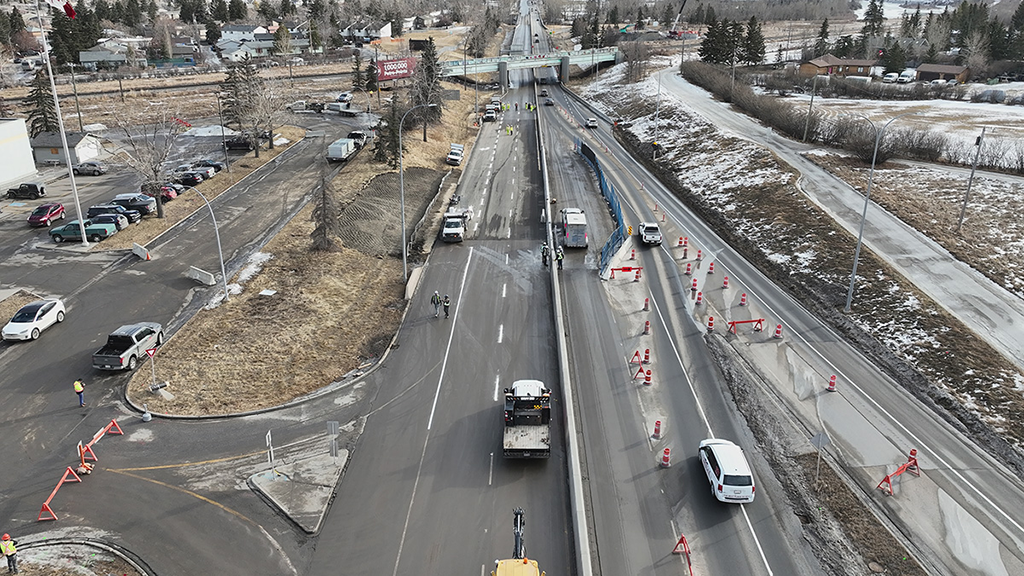
The annual (PWIS) is taking place Thursday (Jan. 22).
This event brings together public sector project owners and local industry to share ideas and build relationships.
There will be presentations on capital projects coming to market as well as industry-civic collaboration.Ìý
The event is co-hosted by the Alberta Roadbuilders and Heavy °µÍø½ûÇøion Association (ARHCA) and the Calgary °µÍø½ûÇøion Association (CCA).
“About 500 industry people who are looking for information about and insight into public sector projects will be attending,� says CCA president Bill Black. “The City of Calgary, the University of Calgary, Calgary Municipal Land Corporation (CMLC) and Calgary Airport Authority will be there to give updates on their capital projects.�
The symposium has two sessions. One will be presented by the City of Calgary, and the second by the university, CMLC and the airport.
The keynote speaker is Michael Thompson, Calgary’s general manager, infrastructure services.
PWIS is held every year in the third week of January.
“It sets the tone for civil and commercial construction in Calgary for the rest of the year,� says Black.
Black says that although the recent Calgary watermain break or the independent panel report on the June 2024 fracture aren’t on the official meeting agenda, he says they will probably be discussed.
“They’re the elephant in the room,â€� says Black.Ìý “I’m sure industry attendees will want to hear the latest update from the city on the water situation and what it has to say about the panel report.â€�
On Dec. 30, 2025, there was a break in the Bearspaw South Feeder Main (BPSFM), which provides 60 per cent of the city’s water.
The fracture led to water restrictions and calls for a twin pipe to prevent future failures.
The incident was followed a week later by the release of an independent report into the earlier (June 2024) Ìý
The failure of a section of the system forced city-wide water restrictions that lasted nearly four months.
The review examined what happened during the 2024 incident, why it happened and what changes are needed to prevent a similar incident from recurring.
According to the report, the risk of a failure in a portion of the BPSFM was first identified in 2004, after a similar rupture on the same type of prestressed concrete cylinder pipe in another feeder main.
Despite repeated identification of the risk, the report says, the city prioritized other municipal needs, and for 20 years put off inspecting and monitoring BPSFM.
According to the report, the deferral was the result of underestimating the chances of failure, not appreciating the significant impact of a failure, taking on other priorities as well as being occasionally constrained by operating budgets.
The review says these gaps were the result of external pressures, ineffective management risk and asset integrity processes, and insufficient effective governance oversight.
The panel recommends strengthening risk management and asset integrity processes, establishing a dedicated utility department with segmented financial statements and establishing an independent expert water utility oversight board.
Black says the report of the independent panel was “pretty damning.�
“It outlined 21 years of failure to manage water utility infrastructure risk properly,� he says.
Black says Calgary’s water utility system, unlike other systems in Canada, doesn’t have any redundancy built into it.
Water utility redundancy means building backup systems and alternative pathways into water infrastructure (pipes, pumps, treatment processes) to ensure continuous, reliable service during equipment failure, maintenance or disasters.
Ron Glen, CEO of ARHCA, says the important lesson from the panel report is that there needs to be a cultural change in how owners of public assets see infrastructure risk.
He says all the different infrastructure players need to carefully think about the “saw-off� between the high impact of an incident and its probability.
“Many owners have been allowed to justify putting off needed maintenance and repair to critical urban infrastructure,� says Glen. “All the under-investment over the years has led to a sinkhole that we’re digging out of now at great expense. It’s a problem all across Canada, not just Calgary.�
Glen says the Alberta highway system is getting to the same point where water infrastructure is now.
“There are many ruts and cracks in the roads and they need to be repaired,� says Glen. “Many bridges are also in disrepair. It’s a serious situation, especially in rural Alberta. There will come a reckoning if nothing is done about the situation soon.�


Recent Comments
comments for this post are closed