


The call across North America to build more homes faster to address a serious housing shortage has been challenged in part by the rising cost of materials. The result is the continued use of traditional “stick� construction.
Dimensional lumber is readily available and relatively inexpensive. However, it burns easily. With that comes the risk for catastrophes in areas increasingly sensitive to natural disasters like fires. Fortunately, mitigating the potential catastrophic loss of lives and property from fire is possible with materials other than wood.
One possible replacement for traditional lumber framing would be cold formed steel (CFS).
CFS is manufactured by shaping thin-gauge steel sheets at room temperature using precision roll-forming technology. Due to the work-hardening effect of the cold-forming process, it maintains tight tolerances and a high yield strength.Â
Builders can benefit in other ways. Prefabricated CFS components can arrive onsite ready to assemble, reducing labour costs and material waste. Unlike timber, CFS will not warp or suffer damage from pests and does not require time to dry out if exposed to the elements.Â
CFS is easy to install due to its light weight, while simultaneously offering an exceptional weight-to-strength ratio. The material is also environmentally friendly in that it requires far less energy to create than hot-rolled steel and is 100 per cent recyclable.
However, the fire resistance of CFS that can really pay back both owners and builders.
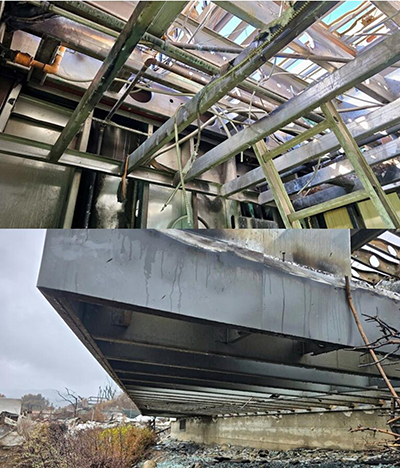
In Australia, where bushfires are an increasing threat, a published by the Queensland University of Technology found CFS framed walls act as, “key components of the building envelope� and therefore, “play a critical role in resisting bushfire attacks.�
CFS is inherently non-combustible and therefore does not contribute to the spread of fire and retains its structural integrity when exposed to high temperatures. Since time is of the essence during a fire, occupants have an increased opportunity to evacuate, reducing fatalities. Firefighters also have more time to control the fire in order minimize damage.
Many builders continue to support the idea that stick construction is the least expensive way to provide affordable housing in both single family and multi-unit low rise residential buildings.
However, this belief is not wholly supported by a Steel Framing Industry Association . It investigated the construction costs of identical buildings – one designed with wood and the other with CFS framing. In one case study, the hard construction costs showed an increase of 2.61 per cent for CFS over wood. But when the price of insurance during the construction phase was included in a second similar case study, the difference dropped to less than 1.0 per cent.
“Insurance premiums are one of the many factors that can determine a project’s final price tag, representing five per cent of costs during construction, and up to 10 per cent of the cost of long-term operation of the structure,� the Steel Framing Industry. For example, the association references a program for Builders Risk Insurance provided by US Assure available in the United States. It recognizes steel framing as non-combustible and slashes premiums by as much as 25 to 75 per cent when steel-framed products are used for all of the structural elements in commercial construction projects. In recognition of the fire resistant qualities of CFS, insurers often pass on premium reductions to the project occupants.
The Australian researchers also pointed out exterior cladding materials can influence fire resistance. After evaluating seven external CFS wall systems under two bushfire curves, they concluded Autoclaved Aerated Concrete (AAC) panels provided the strongest thermal protection across tested conditions.Â
Nevertheless, the report also said, “Thin-walled steel studs maintained sufficient load-bearing capacity, with yield strength and elastic modulus reduced by less than 20 per cent.�
Many wall systems remained structurally recoverable after bushfire exposure, with most assemblies requiring only targeted repairs.
Meanwhile, the CFS manufacturing industry is constantly working on new ideas and innovations to further improve the materials’ fire resistance.
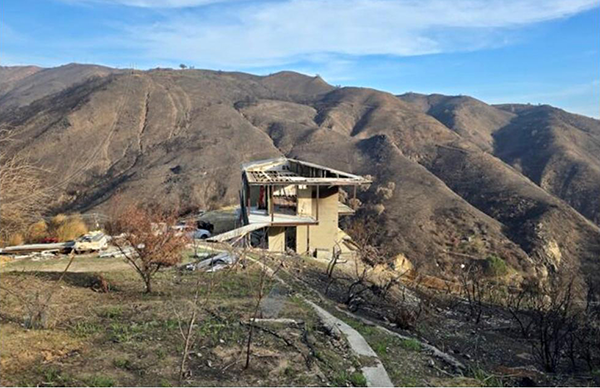
Recent roll-forming advances have resulted in larger and thicker steel studs and joists, which expands design possibilities options like wider clear spans and more open layouts, but importantly strengthens CFS’s performance against fire and other hazards.
Manufacturers can now also offer fire-resistant coatings applied to the surface of CFS components. These act as insulators by forming a protective layer that shields the underlying CFS from direct contact with flames and high heat. These coatings can be “intumescent,� meaning they undergo a chemical reaction when exposed to heat that causes them to expand, thereby creating a thick, insulating layer. Or they could be “ablative� coatings that erode when exposed to high temperatures, thereby dissipating heat and protecting the underlying CFS.
The resultant delay of the temperature rise of the steel helps to maintain its structural integrity longer. The coatings also prevent premature warping, twisting or buckling of CFS components during a fire.
While CFS offers significant fire resistance benefits over traditional wood construction, it is not totally immune to fire damage when exposed to extremely high temperatures. However, the material offers superior durability, enhanced security and safety from fires versus traditional lumber.
Next week, Climate and °µÍø½ûÇøion will examine another promising fire-resistant building material: Insulated Concrete Forms.
John Bleasby is a freelance writer. Send comments and Inside Innovation column ideas to editor@dailycommercialnews.com.


Recent Comments
comments for this post are closed