

As an organization dedicated to improving municipal roads and associated infrastructure, Good Roads turned the spotlight on innovation, techniques, advancements and road construction trends at several seminars during its recent annual conference in Toronto.
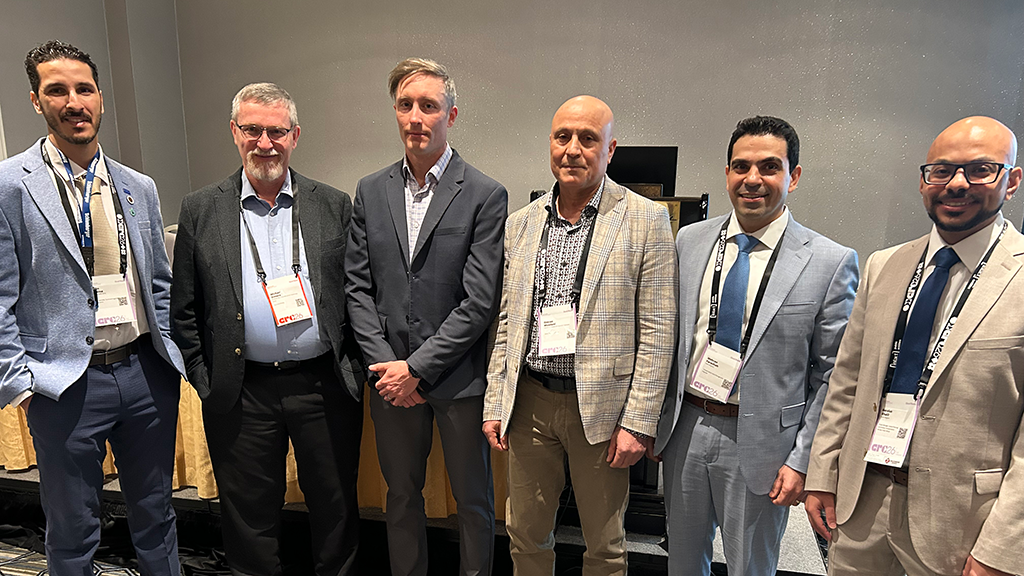
Moderated by Good Roads senior research specialist Amin Mneina, one of those sessions focused on Innovations in Asphalt Paving and featured five speakers.
Leading off the seminar were two York Region officials, transportation asset management engineer Mehran Farashah and regional project manager Kerolus Khalil, as well as National Research Council (NRC) senior research officer Omran Maadani.
They presented a recap of the region’s recently completed and groundbreaking — both literally and figuratively — High Reclaimed Asphalt Pavement (RAP) trial along an eight-kilometre stretch of Leslie Street.
The region and the NRC are joint partners in the test project trial which is intended to measure the performance of High RAP and, hopefully, lessen the region’s dependence on aggregates and other natural materials for road construction and maintenance.
Last fall Viola Alliance completed a seven-month reconstruction of the street just south of Highway 7 north to just south of Elgin Mills Road East.
Standard asphalt mixes for both the surface and base layers were used on the southbound lanes. On the northbound lanes, however, higher percentages of RAP were incorporated into the asphalt for four different road sections, Khalil told the audience.
Long-term monitoring of the pavement performance will be conducted by the NRC through the use of a panel instrumentation system the agency designed. It consists of five solar-powered (with battery backup) instrumentation panels along the route. Electric wires extend from the boxes to sensors connected to both the trial and control sections.
“The scope of the project was to design a state-of-the-art panel instrumentation system with the objectives to monitor and evaluate the structural and environmental behaviour of flexible pavements constructed with high RAP content,� said Maadani.
Some of the factors the NRC had to take into account included traffic speed, moisture content along the stretch and freeze/thaw cycles, he said.
Other municipalities may be monitoring the project’s success.
Certainly, Durham Region is planning a High RAP test project later this year, said its construction management services manager, Ben McWade.
But that wasn’t the focus of his turn at the lectern.
Rather, McWade delivered a case study on how Durham’s rehabilitation of four regional roads in 2024/2025 through Hot-in-Place Recycling has saved it money, materials and time.
Rather than removing the existing asphalt and hauling it away, the Hot-in-Place Recycling was a six step-looped process that allowed for a 100-per-cent reuse of existing road material.
“It (the project) significantly cut CO2 emissions and reduced the logistical cost of hauling material to the road sites,� he said.
The procedure involved the use of three preheaters to heat the existing asphalt, a recycling machine attached to use of the preheaters and then traditional paving and rolling, he said.
In an interview after the conference, McWade explained this is the first time in several years Durham Region has employed Hot-in-Place Recycling. A number of reasons, including existing site conditions and the location, determined the selection of the four roads.
The four road sections are: Shirley Road from east of Simcoe Street to east of Graham Road in Scugog Township; Regional Highway 2 from Ovens Road to east of East Townline Road in Clarington; Lake Ridge Road from north of the roundabout at Regional Road 12 to south of the MTO Highway 48 in Brock Township; and 4590 Garrard Road, which is the entranceway to the region’s materials recovery facility in Whitby.
The fifth speaker made the case for using Aramid Reinforced Composite Asphalt, a synthetic material developed by Surface Tech, to resist cracking and rutting.
Aramid is a hair-like fibre that “roots� into the asphalt binder and bonds to granular material to create a 3D reinforced composite material, said Michael Simons, Surface Tech’s technical director.
It can be used on highway, parking lots, airports, port infrastructure and heavy industrial/rail terminal projects.
“Ten per cent of Ontario municipalities are now using Aramid Reinforced Asphalt,� said Simons.
Some of the other road specific seminars at the five-day conference included one on the challenges salt poses for road maintenance, one on building better rural roads and a third on the province’s plans to harmonize road construction standards.






Recent Comments
comments for this post are closed