

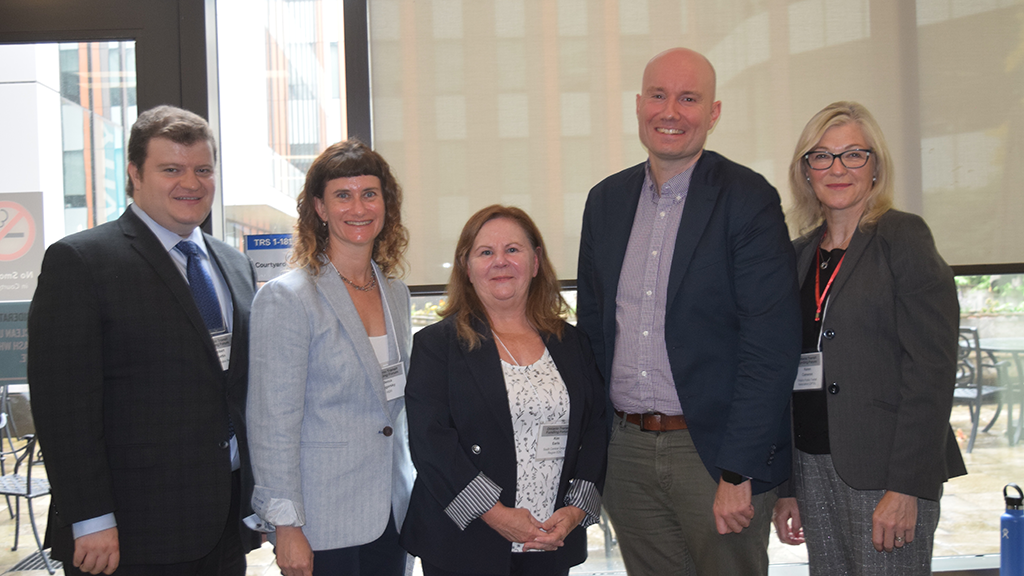
Canadian transit stakeholders must act urgently to address the growing crisis in operations funding, delegates heard at the recent conference held in Toronto.
Meanwhile, on the sidelines amidst the talk of “death spirals” and “fiscal cliffs,” transportation constructors counting on the next wave of major projects may well have reason to be nervous by the threats.
The tone was ominous at the held Sept. 22.
Delegates attending the event, co-hosted by Transport Futures and Toronto Metropolitan University’s were told the deep cuts to Philadelphia’s transit system this summer, where the city’s transit authority found it necessary to cut its bus and rail services by 20 per cent, may not be a one-off.
Conference presenter David Cooper, the principal of , suggested in an interview that public confidence and government support for large new projects could diminish if transit authorities make cuts in service or raise fares.
Confidence may wane
“If we can’t get the benefits of these projects, by getting more people out of their cars, building ridership, increasing our revenues, because we can’t provide that level of service, because that service costs money…the public’s confidence for that may wane,” said Cooper.
“We want to keep building out, but if we can’t get the benefits of what we’re building because we can’t afford to run it, yeah, there’s an intersection there.”
Two morning sessions at the conference addressed the themes The Lay of Ontario’s Transit Funding Land and Assessing Revenue Sources and Tools in Other Jurisdictions, respectively. Cooper told delegates many of the social goals Canadians hold dear are threatened when transit fails.
“The challenge right now is that we have a choice,” he said. “Either we can walk away from our climate goals or equity goals or affordability goals, or we can move forward and actually address them.”
Contributor Robert Martin, a senior data analyst with Mainstreet Public Research, told delegates a recent survey of Ontario residents found significant public support for improved transit – even if, as data seems to show, they want others to ride transit while they prefer the private automobile for themselves.
But support diminishes when a project like Toronto’s Eglinton Crosstown LRT project goes over budget and is delayed.
“There is a lot of anger in terms of this, when transit projects take longer than expected, they’re well over cost,” he said. “People want to see return on their tax dollars, right? They want to see the rail cars moving.”
‘We need this’
But even with that disappointment, Martin reported, a “solid 60 per cent” of Ontarians believed, “Maybe this didn’t go as well as planned, but we need this. We need more transit.”
Karen Cameron, CEO at Ontario Public Transit Association, offered a timeline of highs and lows in transit funding in the province over the past three decades, with provincial downloading a major setback in the 1990s and the launch of a stable gas tax by the Liberals in the 2000s complemented by significant capital spending.
Under the Doug Ford government, Cameron says provincial operations funding is “static” with the gas tax revenues an unreliable source – although she has praise for the “phenomenal” federal Canada Public Transit Fund.
“Transit is a viable option, but once you start cutting service, your people won’t take a bus that comes once an hour. That’s just not an option,” said Cameron.
Current capital funding for buses, bus shelters and other infrastructure in Ontario comes with little operational funding, said Cameron. Similarly, the new Hazel McCallion LRT line in Mississauga currently has no operations funding for its opening.
“So the gas tax, I feel like a bit of a one-trick pony when I go to Queen’s Park and do the Lobby Day,” she said.
Andrew McCurran, director of strategic planning and policy at Vancouver’s TransLink, described guidelines for reforms that agency has followed, leading to an investment plan that was announced earlier this year. Three principles include: fulfill mandates as cost effectively as possible; be entrepreneurial; and ask beneficiaries to contribute their fair share.
Action is imperative, said McCurran, to ensure Vancouver does not become the next
Philadelphia – with Chicago and Portland possibly next.
“It’s horrible. It’s really pretty tragic. And hopefully there’s some academics in the room who have colleagues out there in the world, in the U.S., who are able to study the transit death spiral happening in real time, so that the rest of us can actually understand the dynamics that go into significant service reductions and significant fare increases and what happens to ridership and what happens to the economy,” he said.
Afternoon sessions included The Future of Transportation Funding in Ontario and Visions for Ending Ontario’s Transit Funding Emergency.







Recent Comments
comments for this post are closed