


In my , I focused mainly on the traditional means of generating electricity by turning turbines with the aid of steamed water vapor produced by the heat of nuclear fission. Like everything else in the world these days, technology is evolving.
In this article, I continue to discuss the necessity of expanding nuclear power capacity, yet with an emphasis on small modular reactors, or SMRs, and the progress being made in fusion rather than fission.
TerraPower’s Natrium Reactor: A Game-Changer for Next-Gen Nuclear Energy
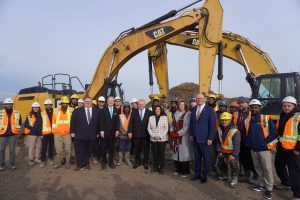
A company founded by , is initiating work on a  named Natrium in Kemmerer, Wyoming. Its cooling agent will be liquid sodium instead of water, a design change expected to lower the capital cost significantly. It will feature 345 megawatts of output, or nearly the power usage of 400,000 homes. If successful, the United Arab Emirates (UAE) has indicated interest in purchasing several units.
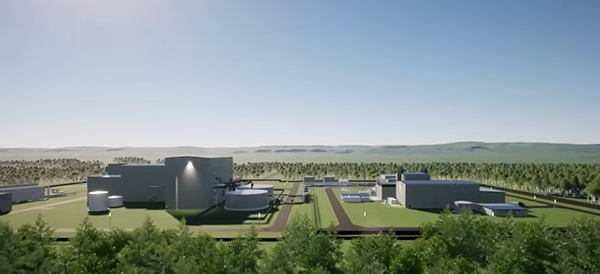
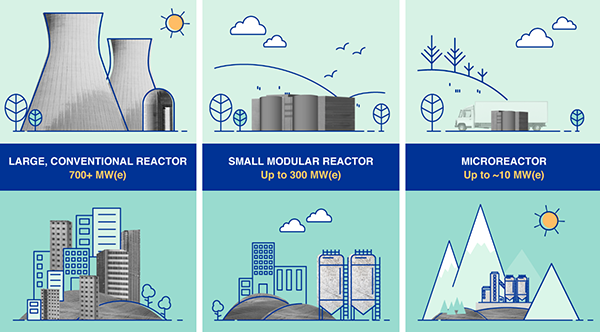
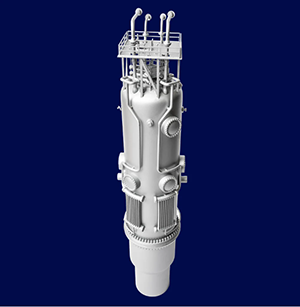
Further, with respect to design change, a more compact version of nuclear plants is being adopted around the world, dubbed . The utility at the forefront of proceeding with SMR work in North America lies north of the border in Ontario.
Ontario’s Billion-Dollar SMR Investment and U.S. Interest in Modular Reactors
At its Darlington location, Ontario Power Generation (OPG) is planning to build four SMRs, with a  on the first one well underway. Its joint venture collaborators are GE, Vernova, Hitachi Nuclear Energy, and .
When all four SMRs are completed, their total cost will likely exceed $20 billion. Besides their more modest scope, the modular component of SMRs is helpful in keeping their price tag, if not bargain basement, at least within the realm of reason.
°Õ³ó±ðÌý is said to be watching OPG’s SMR developmental progress with considerable interest and wondering if it should also adopt such a route.
Fusion Energy Milestones: ITER, WEST, and U.S. Tokamak Projects
The Holy Grail of (i.e., the forced coming together of nuclei) rather than fission (i.e., atoms splitting apart). The latter uses uranium, which has a harmful radiation half-life that extends seemingly forever. The former utilizes a substance termed plasma, which floats freely within a containment field created by powerful electromagnets. In the version of fusion considered most promising, the plasma consists of the hydrogen isotopes deuterium and tritium.
The most exhaustive fusion testing is currently taking place as a multi-nation (including China) collaboration near Cadarache in the south of France at the I. Plus, there are some 20-odd other Tokamak reactor sites worldwide where success has finally been achieved in generating greater than what is required as input. Each new timing increment in ‘ignition’ is greeted enthusiastically by the scientific community.
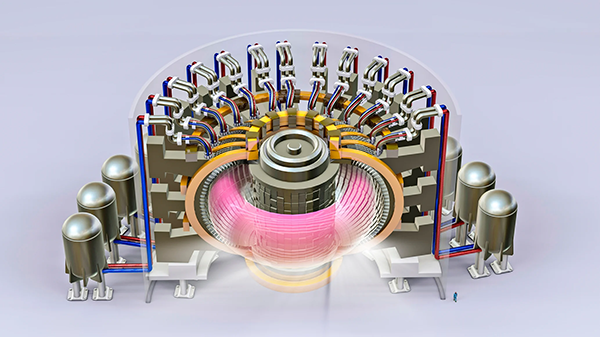
The longest period of ignition at present has lasted approximately 22 minutes. This was achieved at ITER’s WEST (West Environment in Steady-State Tokamak) laboratory reactor location. Two prominent U.S. tokamak reactor sites are the Princeton Plasma Physics Laboratory (PPPL) and theÂ
As a sidebar, the electromagnets designed for the ITER site in France are said to be so powerful they could lift an aircraft carrier. Financially, undertaking something as grand in scale as the ITERÂ is not trivial. Its cost is in the tens of billions of dollars.
Private Sector Fusion Power: MIT Spin-Offs, Billionaire Investments, and Commercial Hopes
 (CFS) has announced that it intends to build the world’s first grid-scale commercial fusion power plant at the James River Industrial Park in Chesterfield County, Virginia. CFS is a private sector offshoot of research conducted at the Massachusetts Institute of Technology (MIT). Understandably, neither a  has yet been established and released.
As a further example of the collaborative efforts underway in the field of fusion, Type One Energy, springing from work done at the University of Wisconsin-Madison, is engaged with the Tennessee Valley Authority (TVA) in planning for the provision of future power needs.
Also, recent media reports have suggested that Amazon’s Jeff Bezos has joined a small group of investors offering seed money to a start-up company, , based in British Columbia.
While the hype for fusion is gaining increasing traction, confirmed by the upsurge of related social media posts, commercially viable are thought to be still, at best, a decade away.
That hasn’t stopped the research departments of brokerage firms from jumping on the nuclear equities investment bandwagon. Some of the companies mentioned in their newsletters to clients are: Cameco, a Canadian uranium supplier that also has a 49% stake in ; Brookfield Renewable Partners, which holds the larger 51% share of Westinghouse; and Paladin Energy, which has 75% ownership of a large uranium mine in Namibia.
Continuing in the same vein, there is BWX Technologies, which plays a vital role in naval nuclear propulsion systems; GE Vernova, which is also big in the wind turbine business;  and referred to frequently in my preceding article; and Corvallis, Oregon-based , a leading authority on SMRs.







Recent Comments
comments for this post are closed