

Ìý
Surge in AI Data Centers Fuels °µÍø½ûÇøion Demand
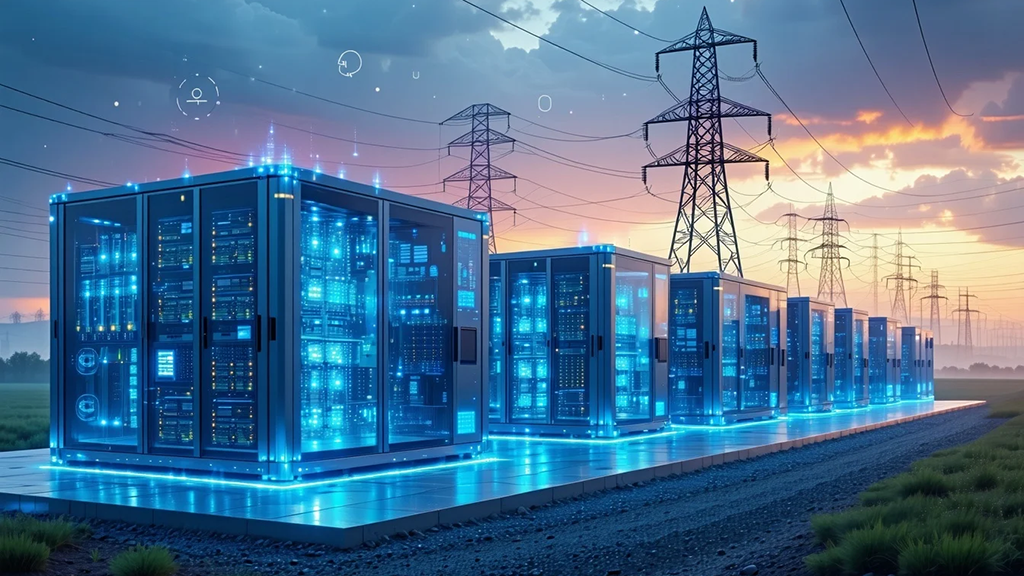
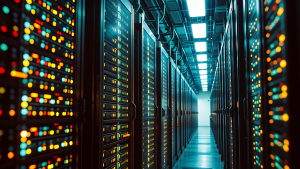
The increase inÌýemanating from the proliferation ofÌýÌýhas been a significant story for several years. But with the onset of AI-focused data centersÌýand their much greater need for electricity, another narrative with major significance exists.
Ìý
AI’s Soaring Energy Needs Drive Power Grid Strain
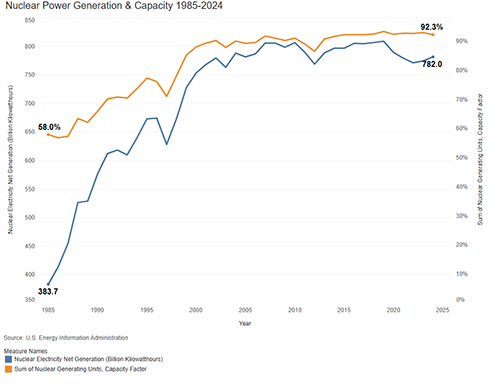
The server farms contained in immense newÌýnecessitate electricity capacity well beyond what was projected as peak only a short while ago. A major consequence? The U.S. power supply industry has seen a tipping point. After decades of governmental and societal neglect and often outright disapproval, a positive view of nuclear power has emerged.
In some U.S. states, theÌýfrom AI data centers is expected to reach as much as one-quarter of total demand. In Virginia, the server farm and Internet capital of the world, centered in Loudoun County, the proportion may even reach half.
Ìý
Two Tech Developments May Ease AI’s Energy Burden
Two tech-heavy developments may somewhat alleviate the outlook for big wattage drains from AI. First, the Chinese DeepSeek version of AI provides a prototype that is not nearly as energy-intensiveÌýas the ChatGPT version at the cutting edge in the U.S. high-tech space.
Second, another key aid to reducingÌýdrainage from AI may come with the advances in quantum computing that aren’t yet at the finish line but are progressing rapidly. The chief benefit derived from quantum computing is the greatly heightened computation speed.
Ìý
Big Tech Turns to Nuclear Power for Long-Term Energy Supply
The biggest and most recognizable corporate names in the U.S. high-tech sector, reaping rewards from the now ubiquitous big data cloud environment and expecting that AI will drive their future profitability success, are rushing to sign on with utilities or find other means to ensure their future burgeoningÌýÌýneeds.
Microsoft Reopens Three Mile Island Unit to Power Data Centers
A starting point for some such firms has been to enter into agreements with owners to recommission mothballed plants. Getting the ball rolling was Microsoft contracting with Constellation Energy, over a 20-year time horizon, to re-open Unit 1 of the Three Mile Island nuclear facility (a.k.a., the Crane Clean Energy Center) in Pennsylvania. Unit 1 was not part of the notorious accidental happenings that gave nuclear power such a bad rap in 1979.
Ìý
Holtec Aims to Restart Palisades Nuclear Plant in Michigan
Another company recognizing the potential arising from the notable increase in AI power usage is Holtec International. Given regulatory approval, it hopes to bring the Palisades nuclear site in Van Buren County, Michigan, back online soon. The plant, operated by Entergy and lying almost directly across Lake Michigan from Chicago, was shuttered in 2022.
Ìý
Meta and AWS Secure Multi-Billion-Dollar Nuclear Energy Deals
To service its data centers situated near Chicago (e.g., its DeKalb campus to the west), Meta Platforms (Facebook) has signed a 20-year multi-billion-dollarÌýÌýwith Constellation Energy, which owns the Clinton Clean Energy Center in the middle of Illinois.
Amazon Web Services (AWS) has signed a $20 billion contract, extending into the 2040s, to buy electricity from Talen Energy to supply a couple of immenseÌýcomplexes it is building in Pennsylvania. The electricity will be sourced from Talen’s Susquehanna nuclear station in the state’s northeast. AWS is also exploring the idea of building aÌýwith Dominion Energy of Virginia.
Ìý
Expansion of New Nuclear Plants Underway in Multiple States
There’s also plenty happening in the field of new nuclear power plants. The New York Power Authority (NYPA) hasÌýÌýto be built, most likely nearÌýÌýexisting station at Nine Mile Point in Oswego, north of Syracuse. The company already has power operations at three existing sites in New York.
Google has committed early development funding to Elementl Power for theÌýÌýto generate 600 megawatts each. The locations are, as yet, unreported.
Ìý
Westinghouse and Federal Policy Push AP1000 Reactor Rollout
Taking its cue from Washington, Westinghouse is contemplating construction groundbreakings on ten new AP1000 nuclear reactors within the next five years. The company played an instrumental role in completing Units 3 and 4 of the Alvin W. Vogtle generating plant southeast of Atlanta, Georgia. Vogtle is now delivering the first fresh nuclear power in the U.S. in decades.
Ìý
U.S. Government and Global Institutions Embrace Nuclear
As for the official government stance on nuclear power generation in the U.S., the Trump Administration has informed the Department of Energy that it wishes to see tenÌýÌýby 2030.
Ìý
Global Shift: Europe and World Bank Reconsider Nuclear Energy
The renewed interest in nuclear as a key answer to supplying future power needs is not unique to America. Countries throughout Europe have recently changed their tune. As just two examples, Germany has dropped its former opposition to the operation ofÌý, and the government of Sweden has committed to financing at least a couple of new large-scale reactors, or an equivalent in electricity generation from SMRs, to add several gigawatts ofÌýÌýby 2035.
Also noteworthy is that the World Bank has just ended its decades-long objection to and ban on financingÌý.
Ìý
Looking Ahead: Small Modular Reactors and Fusion on the Horizon
There is much more to be said on the necessity of expanding nuclear power capacity, with an emphasis on SMRs and the practical progress being made in fusion as opposed to fission.
Stay tuned toÌýfor Part 2 of this story:ÌýThe Prospects for Billion-Dollar-Plus Nuclear Projects.


Recent Comments
comments for this post are closed