

It’s just after 12 p.m. on a Saturday afternoon in April at the sprawling construction site in downtown Oklahoma City.
Three excavators, a couple of dozers, loaders, compactors and a water truck are parked in the middle of the muddy brown parcel of land. Crews are prepping the site for construction and fencing has been installed atop concrete barriers that wrap around the perimeter of the property.
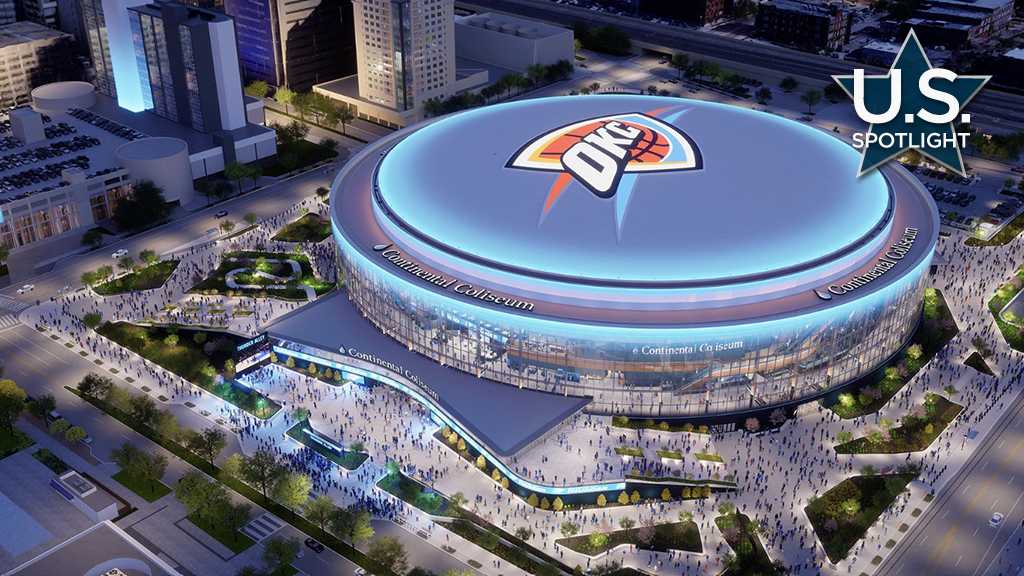
Welcome to the future home of the new $900-million Continental Coliseum arena. The modern, transparent landmark on the block bounded by Reno, Ron Norick, Sheridan and E.K. Gaylord will be future home of the Oklahoma City Thunder of the NBA.
The venue is being built on the site of the former convention centre across the street from Paycom Center. Spanning 750,000 square feet of space, the building will serve as a catalyst for the city’s economic and cultural renaissance. It is the most ambitious project in the city’s history.
“This moment speaks to our aspirations as a city,� Mayor David Holt said at a recent groundbreaking. “Not only are we making the statement that we wish to remain a big-league city, the scale and beauty of this project also makes an esthetic statement that will resonate for generations.�
The new arena, scheduled to open by late summer 2028, will anchor the city’s downtown for decades to come. The team has committed to remain in Oklahoma City through at least 2053.
Designed to be both visually striking and fan-focused, the building will introduce a bold architectural identity to the city’s downtown. The design is led by MANICA Architecture, with TVS serving as architect of record.
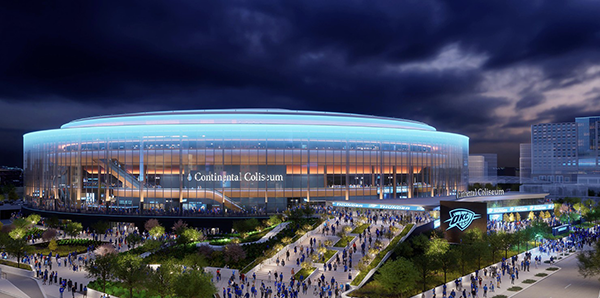
Renderings of the structure show a round structure with expansive entrance. The arena’s defining feature is a 360-degree glass curtain wall, offering sweeping views from interior concourses and reinforcing a sense of openness and connection between the building and the city.
“Guided by the unifying, championship mentality that drives this organization, we’re honoured to have shaped a world-class arena worthy of the Oklahoma City Thunder and the community that powers it,” said MANICA owner and president David Manica. “This one-of-one design will elevate the fan experience and position Oklahoma City among the NBA’s premier arenas and destination cities. Unlike anything built to date, it establishes a new global standard for the arenas of tomorrow.”
A west-facing main entrance will align with Myriad Botanical Gardens, capturing Oklahoma’s dramatic sunsets and leading into “Thunder Alley,� a street-level fan activation zone built directly into the arena’s footprint.
Above, an elevated entrance atop a grand podium will create what designers describe as an “inspiring sense of arrival.�
Inside, the arena is engineered with basketball at its core. Optimized sightlines and tightly configured seating are intended to produce an intense, intimate atmosphere – one that amplifies crowd noise and enhances the home-court advantage.
Rob O’Keefe, senior principal at TVS, added the project is deeply rooted in the city’s identity.
“Continental Coliseum represents a long-term investment in the region’s future – one that will deepen civic pride, elevate the visitor experience and generate lasting economic benefit.â€�
°µÍø½ûÇøion of the arena will be carried out by a joint venture between Tulsa, Oklahoma-based Flintco, and Mortenson, a U.S.-based top 25 developer, builder and engineering services provider, combining national expertise with local roots.
“Breaking ground on this arena is a proud moment for Oklahoma City,� said Dave Kollmann of Flintco. “As a company founded in Oklahoma, it’s especially meaningful to help build a world-class home for the Thunder that reflects the energy, pride and passion of this community.�
The project site itself carries decades of history. The arena will rise where the former convention centre – originally opened in 1972 as the Myriad Convention Center – stood for more than half a century, hosting thousands of events under various names before its demolition began earlier this year.
The Continental Coliseum will be publicly owned and funded through a voter-approved initiative. In December 2023, Oklahoma City residents approved a one-cent sales tax – by a margin of 71 per cent – to finance the arena’s construction. The tax will run for 72 months without increasing the existing rate.
Additional funding includes $78 million from a program called MAPS and a $50-million contribution from Thunder ownership. The facility will be managed by Legends Global.
Beyond serving as the Thunder’s home court, the arena is expected to host concerts, family shows and major sporting events.
City officials say the development will also act as a catalyst for continued economic and cultural growth in the downtown core, building on momentum generated by previous MAPS initiatives.
With construction underway, the Thunder will continue to play at Paycom Center until the new arena opens.
“This is the city’s most ambitious public project in our history,â€� Holt said. “And when it’s complete, it will stand as a symbol of who we are – and where we’re going.â€�





Recent Comments
comments for this post are closed