

Texas faces a surge in power demand over the next five years. New and existing data centers are often singled out as the newest and biggest power customers. Texas is already home to over 340 facilities and many more are planned.
t, data centers already represent about nine per cent of all Texas’ electricity demand.
ERCOT, the non-profit organization that manages about 90 per cent of the state’s electrical load, requests received for new connections to the grid have more than doubled since March 2024. This includes big power users such as data centers, bitcoin miners and hydrogen producers.
Overall economic expansion and the rapid growth of new housing developments stand alongside as demand factors, as does a continually warming climate. In his issued in April, ERCOT supervisor of operational forecasting Chris Coleman predicted 2025 to rank among the 10 hottest summers in state history. That means an increased use of mechanical cooling.
Demand projections for 2030 have been revised upwards by 75 per cent from the current record levels.
This will require all forms of generation to meet the state’s needs, a likely combination of natural gas, renewables and nuclear.
Going forward, it will be an interesting time for the supply of power generation in Texas. Each potential source comes with cost and timeline implications.
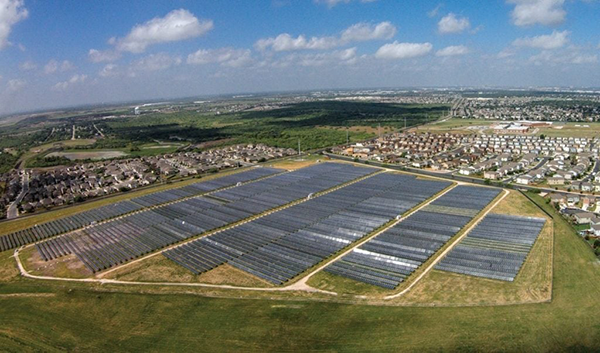
Texas has already been responding with a significant growth in power generation, particularly from renewables. According to ERCOT, more than 9600 MW of capacity has been added to the state’s grid since last summer. Nearly 5400 MW came from solar, 3821 MW from energy storage and 253 MW from wind power. In fact, Texas led the country in new installed and capacity in both 2023 and 2024. Today, of the state’s power comes from these two sources alone, up from 18 per cent in 2019.
However, President Donald Trump’s “One Big Beautiful Bill” Act cut the heart out of federal tax incentives for new wind and solar generation for both large projects and individual homeowners. As a result, although Kristi Hobbs, ERCOT’s vice-president of system planning and weatherization, in June 2024 that over 85 per cent of generation seeking interconnection was solar, this was before recent tariff uncertainty and tax cancellations.
Downward revisions are probably now necessary. In fact, approximately 5300 MW of renewable energy projects had already in May and June of this year alone.
The high cost of solar generation in the United States is also hard to ignore. In an with Inside Energy, Chris Seiple, Wood Mackenzie’s vice-chairman for power and renewables, estimated it costs 50 per cent more to develop solar power in the U.S. than in Europe. Yet there may be little choice but to pay the price, since solar power can come online faster than other generation methods.
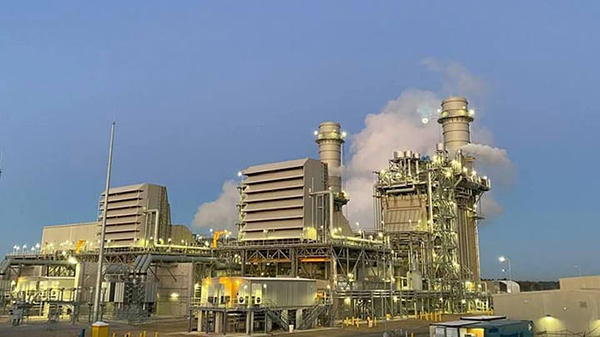
In the meantime at the state level, Texas continues to show its long-standing bias towards fossil-fueled power generation, despite a 366 MW decline in natural gas power generation capacity since last summer due to facility retirements, deactivations and losses of available generating capacity. A $5 billion addition to its Texas Energy Fund, a low-interest loan program to incentivize the development of gas-fueled power plants, was recently passed into law.
However, new natural gas generation isn’t cheap. Ed Hirs of the told the cost to build a new natural gas power plant has doubled over the last four years, outstripping cost increases for large scale solar farms. They also take years to build and require steel pipelines to carry fuel to the facility site.
However, this isn’t slowing down interest in natural gas power generation in Texas.
As reported in , the builders of Stargate in Abilene, Texas, one of the world’s largest data center projects, in January to build 360 MW of gas power generation. Elsewhere, more than 130 new gas-fired power plants are being planned.
ERCOT estimates the near-term power demand in Texas will expand to a level equivalent to 30 new nuclear plants. This calls into question whether Small Modular Reactors (SMRs) are the answer.
SMRs make sense for large users like data centers given their need for reliable 24/7 power, despite their high capital cost relative to natural gas and renewables. It’s a connection that should continue to strengthen, Gordon Dolven, director of data center research at CBRE.In fact, Amazon and Google have each announced plans to use SMRs to generate electricity for their future data centre projects in various parts of the country.
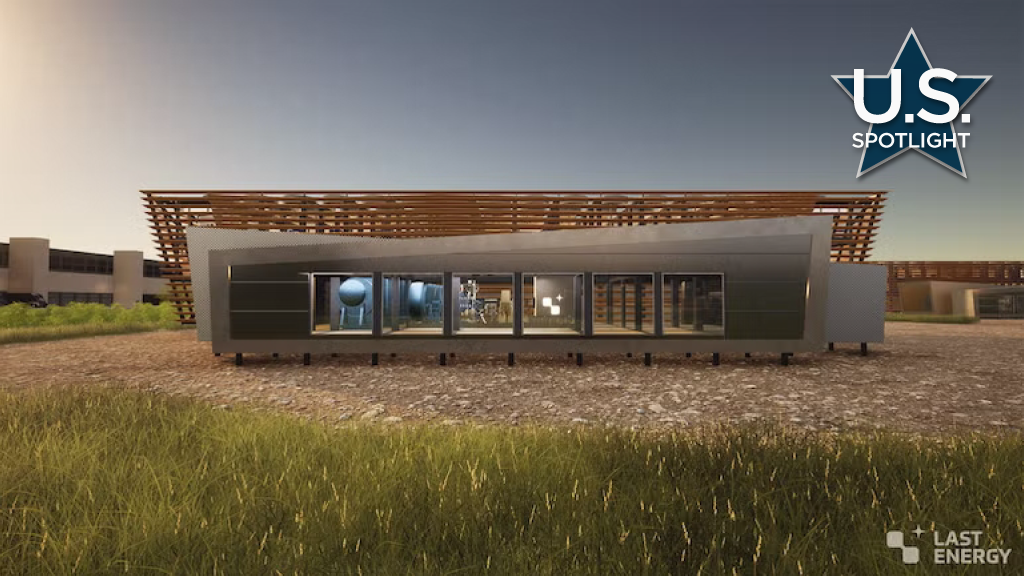
SMRs are coming to Texas too. U.S.-based micro-nuclear technology developer Last Energy announced plans in February to build 30 micro reactors on a 200-acre site in Haskell County, west of Dallas, to serve data center customers across the state via a grid connection with ERCOT.
Ultimately, there will be no one single solution for power generation in Texas. Every available method will be explored and utilised, based on the timelines surrounding customer demand.







Recent Comments
comments for this post are closed