


It’s everywhere and being talked about by everyone.
AI development and adoption is growing across all industry sectors, including construction. It’s making its presence felt in architecture and design as well, albeit slowly.
In a conducted by AI design software developer Chaos and digital database Architizer, only four per cent of architecture professionals have taken any form of training in AI. Only 18 per cent intend to do so in the near future.
When concerns are raised about how AI might displace human thought, proponents quickly suggest everyone take a pause. Replacing humans is not the end goal of AI in architecture.
Vivek Vishwakarma AI-assisted design as, “akin to setting your design challenge in front of a hyper-motivated AI intern and telling him, ‘Surprise me — but functional, esthetically pleasing, cost-efficient, sustainable and possibly even Instagram-worthy.’�
Yes, AI has the capability to test thousands of design variations based on human input, but that is the key part — human input. And as projects become increasingly complex and involve more stakeholders, AI should be seen as a vital tool, not an adversary.
“The essence of architecture lies in the irreplaceable human qualities of creativity and intuition,â€� Chaos. “The ability to conceive original ideas, envision spaces that evoke emotions, and weave cultural narratives into designs remains uniquely human. These include creativity, intuition and the ability to understand complex emotional and cultural nuances that inform design decisions. AI may suggest solutions, but the architect’s critical thinking and experience ultimately evaluate those options and make the final call.â€�
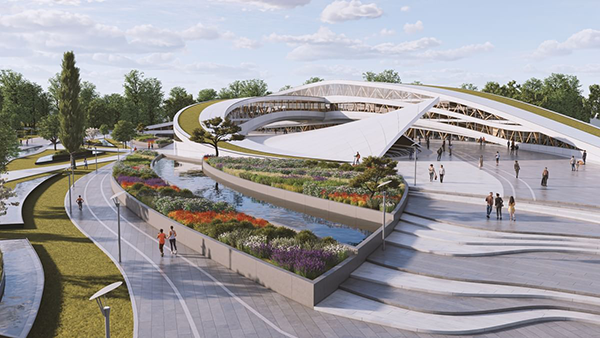
Often, the focus on AI is its ability to create stunning renderings, even animations, that show human activity on a proposed design.
Certainly AI-powered visualization tools, such as real-time rendering and virtual reality, are eye-catching and help designers present their work to clients in a very engaging manner. In this way, more informed discussion and decisions can be made to mutual satisfaction.
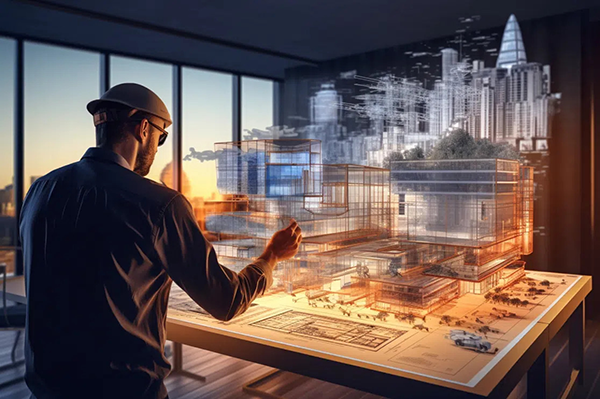
However, it’s important to back up the AI conversation further and consider what it can bring to other critical aspects of project development before any shovels hit the ground.
Since AI has the ability to process immense amount of data, it can automate certain processes and streamline workflows. Designs can be enhanced not only by pushing creative boundaries through their outward appearance but by analysing fundamental factors within any design.
As Chaos explains, “By leveraging machine learning algorithms, these tools can detect and correct errors that might be overlooked by human eyes, ensuring higher safety and compliance standards.�
Potential errors could include considerations surrounding building site data, local planning regulations and building codes, and environmental factors, which might result in costly corrections or rework.
AI platform developer addresses this issue, saying, “°µÍø½ûÇøability issues spread across thousands of pages can be detected with AI and presented along with detailed reports that describe potential clashes within hours. Packages can be verified for compliance before submission to minimize the back-and-forth that delays approval. Teams can prioritize, delegate and simplify workflows to improve efficiency.â€�
Material selection can also be optimized for sustainability through AI analysis, reducing waste and delivering labour savings. Operational carbon issues can be addressed, such as optimizations to reduce energy consumption through better design of lighting and HVAC systems.
AI analysis can also assist with consideration given to renewable energy solutions like solar panels and can suggest organic forms inspired by nature, leading to biomimetic designs that are both sustainable and present visually stunning architectural green features.
It would appear impossible for architects and designers to dismiss the future of AI.
As Firmus team member Holly Cindell puts it, “Regardless of what you believe about working with AI, it’s not going away.�
The sooner those among the 60 per cent as having taken no AI training recognize this, the more successfully they will be able to address the innovative and sustainable architectural challenges of the 21st century and unlock new levels of creativity, efficiency and sustainability in their work, says Chaos.
“The collaboration between human ingenuity and AI’s computational power has the potential to create a future where buildings are not only functional and aesthetically pleasing but also responsive to the needs of both people and the planet. The key is to view AI not as a threat but as a powerful ally, a tool that can augment our skills and help us achieve our full potential as architects.â€�
John Bleasby is a freelance writer. Send comments and Inside Innovation column ideas to editor@dailycommercialnews.com.




Recent Comments
comments for this post are closed