


As more companies direct employees away from remote work and back to the office, a quality workplace experience becomes important. The ability to avoid distractions from ambient or exterior noise and sounds can improve productivity and focus, reduce stress and fatigue, and ensure privacy during key personal interactions.
“Noise puts the entire nervous system into a state of acute alertness,” sound insulation company Acoustical Surfaces Inc.
In addition to productivity loss, noise exposure to extra-auditory effects including increased stress, sleeping disorders, hypertension and heart disease.
Although improved operational energy efficiency and interior air quality are key motivators for renovating or retrofitting an existing commercial space, engineers should also take acoustics and soundproofing into account. Relatively simple measures such as acoustic panels in walls and on ceilings can be effective and relatively economical to install.
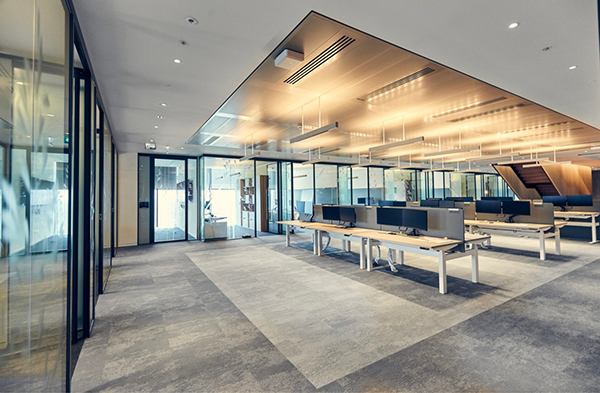
Commercial office interiors may contain any combination of open and cubicle-style workspaces, individual offices and meetings rooms with privacy doors. Each has ambient sound management requirements that need to be addressed. These can result in a set of unique challenges related to the age of the building and its construction, the style of workspace being created and, of course, relevant fire regulations.
The type of commercial activity also matters. For example, a restaurant may benefit from a certain amount of energy and bustle from ambient noise, but not to the point of interfering with the enjoyment of meals and intimate conversation.
In fitness facilities, the whirl of exercise machines can wear on the mind. Consider also the acoustical management requirements of auditoriums and performance halls where specific degrees of liveliness are desired. Each must successfully deal with sound balance.
Sound can be managed in three basic ways: absorption, blocking and vibration isolation.
“Specialized absorption materials reduce reverberation and echo by capturing sound waves instead of allowing them to bounce around a space,” acoustic specialists Soundproof Cow. “This is crucial in open areas, atriums and conference rooms where clarity and comfort are key.”
Acoustic and foam panels and baffles, usually visible to the eye, are available in a variety of colours and finishes to suit the décor.
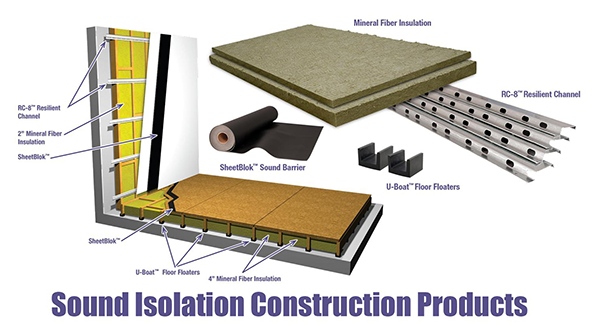
Acoustical blocking involves installing materials such as batts, seals inside walls and ceilings as well as soundproof doors, or heavy vinyl sweeps and seals added to existing ones.
Sound isolation is a bit more complex. Sound vibration can travel along hard surfaces such as floors and into areas where privacy is required, such as meetings rooms. The choice of material chosen for the walls and floors becomes important. Floor underlays are effective when hard surfaces are used. In terms of walls, glass, concrete and drywall react to sound vibration differently, bringing esthetic considerations into the decision-making process concerning where each material should be used.
Sounds carried through mechanical systems such as ducts and pipes also need to be identified and then either isolated or baffled, particularly in existing buildings with older MEP infrastructure.
The issue of airborne noise originating from outside the building requires a different approach. Sound mitigation might then become part of a more extensive exterior cladding solution that includes energy-efficiency and natural light integration.
Project owners should understand the investment cost incurred to effectively deal with acoustical issues will pay off. A well-designed acoustical environment will have a positive impact on the building’s overall attractiveness to tenants and will ultimately add to market value.
Furthermore, there is a legal aspect to be considered. Commercial tenants are entitled to the “quiet enjoyment” of their space.
“In Ontario… this covenant may be either implied or expressly mentioned in the lease,” “A tenant’s right to quiet enjoyment has been codified in Ontario by Section 23 of the Conveyancing and Law of Property Act3, which states that conveyances for valuable consideration, such as payments of rent in the commercial leasing context, imply a covenant for quiet enjoyment.”
All the more reason to add sound management and mitigation into the mix when designing a new project or when renovating an existing commercial structure.
John Bleasby is a freelance writer. Send comments and Inside Innovation column ideas to editor@dailycommercialnews.com.




Recent Comments
comments for this post are closed