

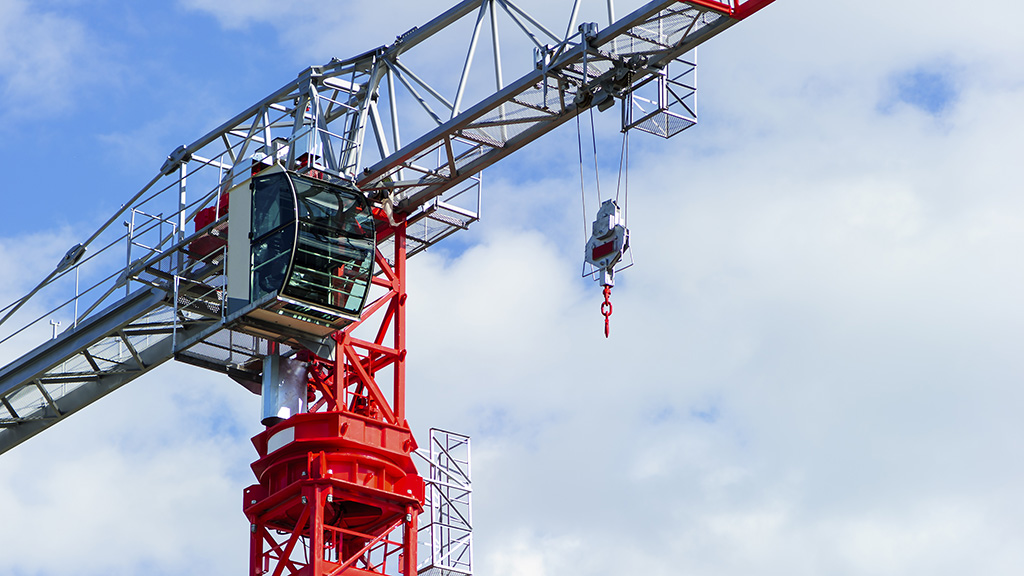
A project is underway to find and figure out how to use various technologies to reduce the carbon emissions of off-road heavy equipment used in construction and other types of industries.
GHD, a leading professional services company, received a contract from Environment and Climate Change Canada (ECCC) to identify market barriers to the adoption of clean technologies across the nation and come up with a clear roadmap of strategies to overcome them.
The end goal is to have a blueprint of practical pathways that ECCC can use to transition Canada’s industrial off-road heavy equipment toward low-carbon and zero-emission alternatives.
“The purpose of this project is to support Canada’s transition to a low-carbon economy by analyzing opportunities to decarbonize industrial off-road equipment,â€� explains Rippan Bhattacharjee, senior adviser, decarbonization at GHD in Toronto. “So far this year,Ìýtransportation has been the largest source of emissions in the country, accounting for 38 per cent.â€�
GHD is looking at various types ofÌýoff-roadÌýequipment andÌýdetermining possibleÌýhurdles as well as probing the infrastructure requirements needed to enable a large-scale shift to cleaner alternatives.
Specifically, notes Bhattacharjee, the project aims to assess low-carbon and zero-emission alternatives to current combustion engine equipment used in industrial operations in construction, mining and manufacturing.
Researchers will identify decarbonization pathways, infrastructure needs, technology availability, operational profiles and compare the costs and emissions of conventional, clean fuel and zero-emission technologies.Ìý Ìý Ìý
Canada is working towards achieving net-zero greenhouse gas (GHG) emissions by 2050, with legislative frameworks, strategic plans and initiatives. Achieving net-zero emissions means the economy emits no GHG emissions or offsets its emissions through actions such as tree planting or employing technologies that can capture carbon before it is released into the air.
According to data compiled by the Conference Board of Canada, Canada is one of the largest per capita greenhouse gas emitters. GHD will assess existing industrialÌýoff-roadÌýequipment.
Due to the limited empirical data on the performance of zero-emission and low-emission off-road equipment, researchers are using a scientifically grounded approach that seeks to estimate fuel efficiency across various powertrains, which in turn allows them to model operating expenditures.
The project began in March and most of the major project tasks have subsequently been completed, including the development of a work plan, equipment list, utilization profiles, identification of zero-emission and low-carbon alternatives, cost comparisons, analysis of operational challenges, infrastructure requirements and decarbonization pathways.
The initiative will come up with suggestions for the construction industry and industrial facilities such as auto manufacturing, iron and steel production, pulp and paper plants and more, all with the goal of helping to reduce emissions from some of the most emissions-intensive industries in the country.
Some of the equipment being examined includes aerial lifts, forklifts, cranes, air compressors, and material handling machines, focusing on fuel sources and operational profiles.
Researchers will also identify global low-carbon and zero-emission technologies for Canadian industrial needs, including clean fuels and zero-emission vehicle options, and compare lifecycle costs and emissions of fossil fuel, clean fuel and zero-emission technologies.
The team will also evaluate the costs, electricity demand and renewable energy integration needed to support the transition to decarbonized equipment.
An initial finding from the project, according to Bhattacharjee, is that electrification appears to be the mostly likely pathway to reduce the carbon emissions of off-road heavy equipment with technologies such as battery-electric and hybrid systems gaining traction across various equipment segments.
“While hydrogen adoption remains limited at this stage, it presents significant long-term potential,� he says.
However, there are obstacles to overcome.
“The limited availability of commercially ready technology is the primary barrier to adoption,� notes Bhattacharjee. “Many zero-emission alternatives in the off-road equipment sector are still in pilot or trial phases, with few models currently available for direct purchase.
“High upfront costs also remain a significant challenge. On the positive side, certain equipment types – such as aircraft support vehicles – do have a few proven, commercially available options.�
In the end, the ECCC will have a clear roadmap for reducing emissions across the country, including identifying market barriers to the adoption of clean technologies and strategies to overcome them.
“Our goal is to provide concrete, actionableÌýresearchÌýthat address the specific needs of Canada’s industrial sector, whether that’s ensuring the readiness of critical infrastructure, optimizing lifecycle costs, or pinpointing the most effective technology solutions,â€� Bhattacharjee noted.
The information will enable the federal government to gain critical data and insights that will shape policy, regulations, and funding opportunities related to the decarbonization of industrial off-road equipment.
GHD is asking industry owners and operators to reach out if they’d like toÌýparticipateÌýin the project.



Recent Comments
comments for this post are closed